Toxic Isn't Tasty. Oil in their water is what the Standing Rock protectors are hoping to prevent, but we don't have to wait for the Dakota Access Pipeline to break to know what that might mean. California citrus growers are irrigating their crops with oil wastewater.
Alyssa Figueroa of Breast Cancer Action says "everyone including state regulators is asleep at the wheel," as 43% of the chemicals used in oil and gas operations have been shown to pose health and environmental risks.
"She changed the landscape of breast cancer forever."
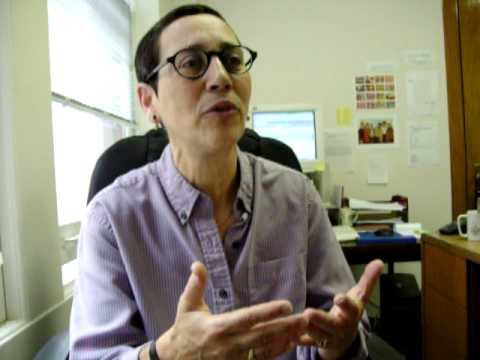
Barbara Brenner changed our understanding of breast cancer and women's health activism. As director of Breast Cancer Action for nearly 20 years, she challenged corporate fundraising, the emphasis on awareness campaigns and the false representation of early detection as prevention. When she was diagnosed with the fatal disease ALS, she used her skills and scientific knowledge to advocate for herself and others with that illness. A new book, So Much to Be Done, collects Brenner's writings about breast cancer, ALS, living and dying. We speak with her life partner, Susie Lampert, and former BCA communications director Angela Wall.
If you want to be sure your time and money are truly making a difference, ask these four questions before participating in or donating to a breast cancer walk.
Breast Cancer Awareness Month is here again - and corporate-sponsored pink ribbons still don't provide women's health care. Listen to a portion of Kate Raphael's interview with Karuna Jagger of Breast Cancer Action about what's wrong with the whole concept of a breast cancer awareness. Click here for complete interview.
"Pink ribbons from their very inception have been a corporate marketing tool...Companies are actually doing harm through these pink ribbons promotions...Pink ribbon culture is not contributing to women's health." Jagger explains how.
Breast Cancer Action has helpful information on mammograms, screening, prevention, treatment, and resources for women of all ages, race and income levels. Breast Cancer Action does not accept money from corporate sponsors who benefit from or contribute to breast cancer.
The Personal Care Products Council and the American Cancer Society are giving women in cancer treatment cosmetics that contain chemicals linked to increased cancer risk and some of the chemicals may actually interfere with breast cancer treatment.
Then we talk with Karuna Jaggar, Executive Director of Breast Cancer Action, about the Susan B. Komen Foundation's latest deal with the devil: its partnership with the company Baker-Hughes, which makes tools for fracking oil and gas. The company painted 1000 of its drill bits Komen's signature pink for Breast Cancer Awareness Month and donated $100,000 to Komen.
Komen is accepting money from the very source that causes breast cancer creating an insidious profit cycle. At least 25% of the chemicals used in fracking cause cancer. Breast Cancer Action takes a stand against the Komen Foundation's commercialization of breast cancer and outlines the ways in which the pink ribbon culture distracts from meaningful progress on breast cancer.
Who isn't aware of breast cancer? What is needed is funding for research into root causes, primary prevention and protection. What is needed is funding for treatments that focus on metastasis, treatments that are affordable and less toxic. What is needed is funding for low income cancer patients so that they may continue treatment and have other necessary services. Honor the diversity of women's experience with breast cancer. Care about women's full lives.
The lives and legacies of death penalty and breast cancer activist Martina Davis-Correia and her brother, Troy Anthony Davis, whose execution in Georgia in 2011 helped to reinvigorate the movement to end the death penalty. We speak with Kimberly Davis, Troy and Martina's sister, and with Jen Marlowe, author of the book I AM TROY DAVIS.
A community book club event for I Am Troy Davis is Saturday, October 11, 2-4 pm at Mudraker's Cafe, 2801 Telegraph in Berkeley. Check out more about Jen films and book events at donkeysaddle.org.
Big news about mammograms -- or is it? What to make of the newly released long-term study from Canada suggesting that screening mammography, contrary to everything we've heard from pink ribbon-funded public education campaigns, does not save lives?
We talk with Karuna Jaggar of Breast Cancer Action and Lochlann Jain, author of MALIGNANT: How Cancer Becomes Us.
ANITA: Speaking Truth to Power, is a new documentary about Anita Hill, the woman at the center of the hearings over Justice Clarence Thomas and sexual harassment. We preview the film with director Freida Lee Mock, whose previous film, MAYA LIN: A Clear Strong Vision, won the Academy Award for best documentary.
The film opens this Friday, March 21st at the Shattuck in Berkeley and the Embarcadero in San Francisco.
Rose Aguilar and Women (or the lack of) in Major Media
In 2013, only 20% of op ed writers, 18% of news sources in major media and 9% of Hollywood film directors were women (slightly down from 1998!). Rose Aguilar, host of Your Call Radio and facilitator of Use Your Voice workshops for women talks about why women have so much trouble breaking in and staying in media, and why it matters.
Jehane Noujaim discusses her film, THE SQUARE, which documents the Egyptian revolution from its earliest days through the overthrow of President Mohammed Morsi. Jehane also talks about the role of violence against women in suppressing the protests, who was behind it and why. Is it worse now in Egypt in general and for women in particular? Noujaim has a refreshing veiwpoint. THE SQUARE, on the short list for an Oscar, opens at the Roxie on January 17, and becomes available on Netflix at the same time.
30:00 min.
Tara Dorabji talks with midwife Treesa McLean about a new California law which will greatly expand access to midwifery and home birth, but also restricts the ability of women with "high risk" pregnancies to choose home birth and midwifery care.Tara and Treesa discuss the good, the bad, and the ugly of the new law AB1308. The new law opens the door for midwives and licensed birth centers to bill MediCal. However, the self-determination clause has been removed, which makes it illegal for a midwife to attend a high-risk home birth. California Families for Midwives advocates for more choices including where, how, and who attends women during their children's birth. 17:00 min
The Pink Ribbon Culture; Narratives on Breast Cancer
And we hear part of Caity Goerke’s interview with Emilia Nielsen, whose research on breast cancer narratives reveals that women feel pressured to "perform" breast cancer in a way that emphasizes optimism. This approach, fueled by the pink ribbon industry, delegitimizes anger and activism, says Nielsen. It robs women of the productive power of anger and focuses only on cure and not causes. This program is excerpted from a syndicated feminist radio show, the F Word, station CFRO out of Vancouver, BC. Click on the link to find archives of previous shows from The F Word. 13:09 min.
Out in Dhaka: Tinku Ishtiaq, cofounder of Trikone South Asian LGBT Network and former cochair of the International Gay & Lesbian Human Rights Commission, discusses the recent labor disasters as well as the militant uprising of Islamist youth in Bangladesh. While Bangladesh has very little personal violence, he says, as a gay man living more or less openly he worries about the possible ramifications of increased Islamist influence in politics.
Barbara Brenner, long-time director of Breast Cancer Action, died recently of ALS. We look back at her life and work and discuss her legacy with coworker Angela Wall.
Get MP3 (18:09)
Finally, the New Jersey 7 are young African American lesbians from Newark who were arrested in New York City after defending themselves from a misogynist and homophobic assault. After being tarred in the media as a "lesbian wolf pack," four of the seven received prison sentences ranging from 2 to 11 years. Patreese Johnson, who got the longest sentence, is scheduled for release this summer. Bay NJ4 Solidarity Committee is raising money for ongoing legal expenses and to help with Patreese's reentry. Click here to find out how to contribute.
Listen to this short interview with Io Sunwoo of Bay Area Solidarity.
Katie Cantral of Factory Farming Awareness Coalition
Did you know that factory farming has polluted over 35,000 miles of rivers in the US?
In this segment, Sharon Sobotta interviews Katie Cantral, Executive Director of the Factory Farming Awareness Coalition. 99% of animal products come from factory farms. Ten billion animals are raised every year in the US on factory farms. This method of raising animals is cruel to the animals, bad for the environment and a huge source of labor injustices. Katie says it takes 2000 gallons of water to raise a pound of beef and 35 gallons of water to raise a pound of vegetables. Chemicals used in the production of milk have been shown to increase the risk of breast cancer in women. Katie gives us an enlightened and empowering way to make a difference on all aspects of this important cause.
Interviews with Ecofeminist Foremothers Marti Kheel and Wangari Maathai
In the next segment, we hear past interviews with two ecofeminist foremothers who have since died: Lisa Dettmer speaks with Marti Kheel, founder of Feminists for Animal Rights and author of Nature's Ethics.
Marti Kheel
Preeti Shekar sits down with Wangari Maathai, Nobel Laureate, founder of Green Belt Movement and author of Unbowed and Replenishing the Earth.
The Project Censored List of Top 25 Censored Stories of 2009-2010 includes not one story related to a women's or gender issue. NOT ONE! Does that mean women's issues get lots of attention? We don't think so. Instead, it points to the masculinist bias of even the progressive media and media watchdogs.
So producer Kate Raphael has produced her own quite inexhaustive list of censored or underreported stories related to women and gender in the last year. See what you think. If you want to comment on one of her choices or suggest one of your own, please email us at kpfawomensmag@gmail.com.
-- New mammogram guidelines stir controversy (interview with Barbara Brenner of Breast Cancer Action)
-- Grassroots women's organizations are leading in the rebuilding of Haiti (interview with Yifat Suskind of Madre International [Malihe points out that Madre's website doesn't even mention Iraq!))
-- Pregnant women prisoners in California still face shackling, and thousands of abused women are still in prison for defending themselves (interview with Karen Shain of Legal Services for Prisoners with Children)
-- Victoire Ingebirre Umuhoza was the leading challenger to Rwandan president Paul Kagame, except instead of being allowed to run, she was imprisoned (Ann Garrison interviewed Ingebirre for WINGS)
-- Many women political prisoners in Iran are held in solitary confinement and without access to lawyers, families or medical care (interview with Malihe Razazan)
-- Year of the Disabled Lesbian (interview with Laura Rifkin, founder of the Fabled Asp project)
-- Disabled women led the fight against cuts to In-Home Support Services and other social welfare programs, with ArnieVille, a tent city in Berkeley (Jean Stewart, Jan Santos and Hannah Jo Karpalo talk about the creative protest known as ArnieVille).
-- More bad news for women workers: Republicans in the Senate filibustered to block passage of the Paycheck Fairness Act, which would have required employers to prove that wage disparities were job-related, not gender based.
-- Did you know there were women working on oil rigs and leading the clean up of the Gulf? Coastal Women for Change is one of a number of women's organizations that sprung into action when the Deepwater Horizon well blew up. (Merle Savage, general foreperson on the Exxon Valdez cleanup, begs President Obama to make BP give the Gulf cleanup crews respirators and tell them the truth about the risk.)
-- Same sex marriage and Don't Ask Don't Tell were all over the media, both mainstream and progressive, but where were the voices of queers who aren't interested in heteronormative marriage or seeing queers join the imperialist military? (Excerpt from the documentary "Beyond Gay Marriage" by Women's Magazine's Lisa Dettmer)
This week on Women's Magazine, we speak with Nigerian feminist scholar Amina Mama about the growing pan-African feminism and its response to AFRICOM; and we hear about how one woman and her daughter dealt with the challenge of breast cancer. Plus a few words about the corporate campaign against breast cancer and the Women's Community Calendar.
Breast Cancer Awareness Month - A Critique and a Story
October is Breast Cancer Awareness Month, or more accurately Corporate Breast Cancer Promotion Month. A few thoughts, and an inspiring story. Audio 16:38
Susie Miller-Reed was a single mother and a self-described workaholic when she was diagnosed with breast cancer 10 years ago. The journey through cancer brought Susie and her daughter Reema al-Zaban closer to each other, and led Reema to create a powerful photo exhibit. Sharon Sobotta reports for KPFA Women's Magazine.
Feminists Respond to AFRICOM: An interview with Amina Mama
Preeti Shekar interviews Nigerian feminist scholar Amina Mama, chair of Gender and Women's Studies at U.C. Davis and Global Fund for Women's Africa programs. Audio 34:05
How is AFRICOM, the U.S. Central Command for Africa, contributing to militarization on the African continent? What other trends are increasing militarism on the continent, and how are feminists responding? Scholar/activist Amina Mama discusses the evolution of a pan-African feminism, much of it in the African diaspora, and also how it links to feminist and anti-capitalist movements in other areas such as Haiti.
"All of us have within us the means to join the dots," she challenges both northern and Southern feminists.
Late last year, the Preventive Services Task Force stunned the country with a report on the advisability and effectiveness of standard breast cancer prevention techniques. Eryn Matthewson of Women's Magazine interviewed Barbara Brenner, founder of Breast Cancer Action, about how she views the task force's advice.
Cervical cancer is one of the most preventable and treatable diseases there is, yet 300,000 Global South women die each year for lack of simple treatments. Preeti Mangala Shekar talks to Dr. Kay Taylor of Prevention International: No Cervical Cancer, who is working to remedy this disparity in women's health care.
Today, Women's Magazine spotlights women living with breast cancer.
In the first half hour you'll hear a documentary on Grace Paley, poet, writer, activist and social critic who died of breast cancer at age 84. Paley's short stories, which were rich with everyday dialogue, often chronicled the lives of women—generally Jewish New Yorkers. The Grace Paley documentary includes a contrast with young poet Ra Goddess. The documentary is produced by Reggie Johnson, with co-production by Deepa Fernandes and Matt Rogers.
In the second half of the show, we'll share a portion of a documentary about breast cancer from an African American perspective.
And, of course, you'll hear Jovelyn's World and the weekly calendar of events. The stories of African American women living with breast cancer comes from WABE's program Journey to Wellness. Today's show is hosted by Jovelyn Richards, the calendar compiled by Yvette Hochberg, and produced by Safi wa Nairobi.