From Kobani in Syria to Cochabama in Bolivia, feminists are creating experiments in collectivism as a means to women’s equality and safety. We hear about the Rojava Revolution, a democratic socialist feminist democracy being constructed in northern Syria, and women’s collectives in Bolivia who are changing the meaning of self-defense in the country with the highest rate of gender-based violence in Latin America.
Listen to the full interview with Janet Biehl (48:53) Listen to interview with Sinam Mohamad, Syrian Democratic Council (Rojava) Representative to the US. Mohamad's home in Afrin was occupied by Turkish-backed forces in March 2018. (53:44)
Tune in to KPFA.org next Friday at noon for more Women's History Month special programming.
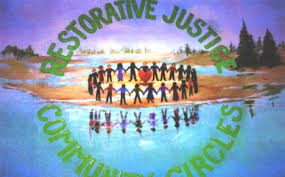
KPFA’s Women’s Magazine looks at the practice of Restorative Justice and how that practice of justice based on healing provides an alternative to the punitive systems we have in our society today. Unlike the punitive system of justice we have, Restorative Justice focuses on healing and transforming the wounds of victims, offenders and communities caused by the wrongdoing through truth telling, apology, making amends, and reconciliation.
We talk to three leaders in Restorative Justice in the Bay Area. Jodie Geddes, Community Organizer Coordinator at Restorative Justice for Oakland Youth (RJOY), Rose Elizondo, co-founder of the San Quentin Prison RJ interfaith group and of the North Oakland Restorative Justice Council, and Malachi Scott, the Re-entry and Community Restorative Justice Coordinator at RJOY and co-founder of the North Oakland Restorative Justice Council.
Please join practitioners and scholars from around the world at the 2017 Sixth National Conference of the National Association of Community and Restorative Justice in Oakland, CA at the Oakland Marriott. Hosted by Restorative Justice for Oakland Youth (RJOY), this year’s theme is Moving Restorative Justice from Margins to Center — elevating historically marginalized voices, promoting radical inclusivity and healing, and exploring the intersections of RJ with other contemporary social justice movements. With healing spaces, circles, youth-led activities, field trips as well as plenaries and panels, we are planning a provocative, participatory, and creative conference in Oakland, the birthplace of the Black Panther Party, and an international cultural and culinary mecca. We look forward to your participation.
We are asking for your support in this fundraising show. I know many of you gave just a month ago and I do not expect you to give again, but if you didn't manage to do it then, please consider making a donation tomorrow by going online at www.kpfa.org. Don't forget to mention Women's Magazine in your donation.
Thanks so much for all your support.
The Violent Construction of Masculinity
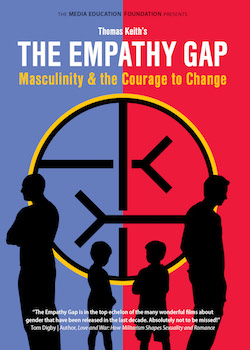
This Monday, September 12, Women's Magazine features two cutting-edge documentaries by men challenging masculine violence by examining how our cultural construction of masculinity pressures boys and men to be aggressive and suppress any feelings but anger. No one exemplifies this more than Donald Trump, says Thomas Keith, in his new film, THE EMPATHY GAP: Masculinity and the Courage to Change. Keith gives a nuanced reading of the interplay between racist and sexist stereotyping in U.S. popular culture and offers evidence-based solutions.
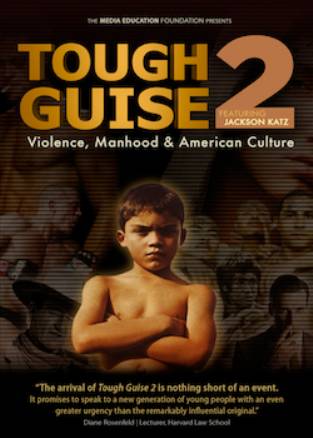
Educator Jackson Katz points out that "Gender" issues are considered "women's issues," just as "race" is assumed to be a problem about people of color and "sexual orientation" is only discussed in relation to LGB people. "It's as if people of the dominant culture have no race, gender or sexual orientation," he says. In “TOUGH GUISE 2,” he proposes a radically different approach to gender violence, foregrounding and challenging the ways that boys are taught to be men.
Kate Raphael and Lisa Dettmer present excerpts from and discuss these powerful documentaries.
Recently widespread outrage has erupted over the bias and leniency in court decisions involving rape and the general acceptance and prevalence of violence against women. In California, a judge's decision to give a white former Stanford University swimmer an unusually lenient six-month jail sentence for sexually assaulting an unconscious Stanford student sparked a campaign to have him removed after the victims stomach churning impact statement went viral. The outrage of women has succeed in forcing Judge Aaron Persky to give up his docket of criminal cases. This is just one of the many cases of sexual assault that women have been protesting in the media garnering widespread attention and also raising the issue of how race and class influences sexual assault decisions.
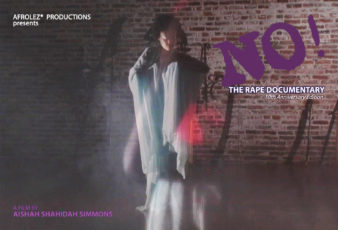
Another incident which Black feminists have taken the lead in debating is the alleged sexual assault by actor and director Nate Parker 17 years ago, which came to the attention of the media after his recent remarks about the victims suicide while promoting his new film "Birth of Nation" about the 1831 slave rebellion led by Nat Turner, a film which had been destined for an Oscar. Today we talk about that case and how class and race intersect with issues of sexual assault with African American Lesbian Feminist filmmaker and writer Aishah Shahidah Simmons. Simmons directed the groundbreaking film “No! The Rape Documentary.” Check out Aisha's Vimeo channel at https://vimeo.com/afrolez. Also see Afrolezproductions.com for more information and discussions about rape.
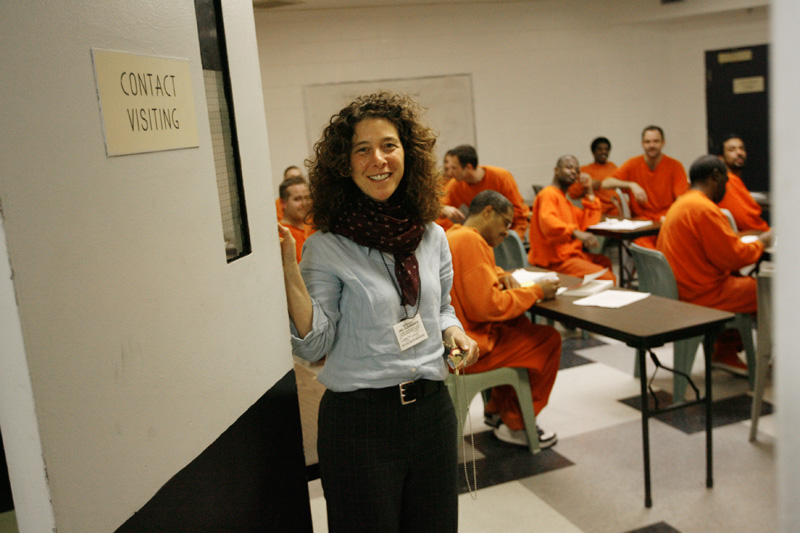
We talk with Margo Perin, founder and director of Write & Rise, about how she uses narrative to help incarcerated and formerly incarcerated people, at risk youth, as well as police and their families, heal from trauma. Perin is the author of the autobiographical novel The Opposite of Hollywood, and contributing editor of the anthologies Only the Dead Can Kill: Stories From Jail, and How I Learned to Cook and Other Writings on Complex Mother-Daughter Relationships.
"I don't think the system can change unless work is done on both sides." Margo Perin
Not Throw Away Women: Black and Indigenous Women Disrupt Violence
And from Making Contact: Not Throw Away Women: Black and Indigenous Women Disrupt Violence. We learn how one community is undoing the silence around the violence women of color face. We also hear about how serial killers were able to hunt down mostly Black women for three decades in South Los Angeles. Then to the Yucatan where pregnant indigenous women struggle under a health care system failing to provide proper medical care.
"If you are a woman of color and you're impoverished, you're at the very bottom and your life is seen as not worth anything." "We may never know just how many women have died."
Click here to listen to this segment from Making Contact. There are 4 audio files so be sure to scroll down. 34:21 min.
Host: Laura Flynn and Jasmin Lopez
Contributing Producers: Rochelle Robinson and Karen Stefan Tenorio
Featuring: Rochelle Robinson, Making Contact Fellow Kimberly Smith, community member attending Her Resilience mural project Gabrielle Rae Travis, Her Resilience Community Outreach Coordinator Margaret Prescod founder of Black Coalition Fighting Back Serial Murders and host of KPFK’s Sojourner Truth Mirna Aracely Tuz Acosta, Safe Maternity for the Indigenous Population in East Yucatan Neyi Amparo Cime Arceo, resident of Xanlah.
Thanks to the Mary Wohlford Foundation for funding towards this program.
Safe Space. Winner, 2014 Lambda Literary Award in LGBT Studies. Now available as an ebook.
Since the 1970s, a key goal of lesbian and gay activists has been protection against street violence, especially in gay neighborhoods. During the same time, policymakers and private developers declared the containment of urban violence to be a top priority. In this important book, Christina B. Hanhardt examines how LGBT calls for "safe space" have been shaped by broader public safety initiatives that have sought solutions in policing and privatization and have had devastating effects along race and class lines.
Drawing on extensive archival and ethnographic research in New York City and San Francisco, Hanhardt traces the entwined histories of LGBT activism, urban development, and U.S. policy in relation to poverty and crime over the past fifty years. She highlights the formation of a mainstream LGBT movement, as well as the very different trajectories followed by radical LGBT and queer grassroots organizations. Placing LGBT activism in the context of shifting liberal and neoliberal policies, Safe Space is a groundbreaking exploration of the contradictory legacies of the LGBT struggle for safety in the city.