Monday, October 3, 2022
Puerto Rico and Hurricanes: More Colonized AND More Determined than Ever Before
One week ago, Hurricane Fiona struck another devastating blow to the people and island of Puerto Rico. The island is not anywhere close to having recovered from the catastrophe caused by the 2017 Hurricane Maria, not to mention from the horrors and devastation of US colonization since 1898, and Spain before.
To give some background to the impacts of Hurricane Fiona, listen to the following excerpt from the Colectivo Ile statement following Fiona:
“Since Hurricane María in 2017… We have endured insults in our most vulnerable moment, discriminatory policies by FEMA at our time of greatest need, and sleazy contractors and speculators promising solutions that were never delivered. Poverty in the Island has been exacerbated while people are being displaced by gentrifiers disguised as liberals and progressives. Our own colonial government could not even acknowledge the loss of more than 3,000 lives caused by the hurricane and agencies’ inaction, nor did they lead us through any process of national grieving. Our people were left defenceless and without hope that an elected government could detain the waves of corruption that followed.”
My guest today is Maria Reinat-Pumarejo, a long-time feminist, anti-racist, anti-oppression organizer and the Founder of Colectivo Ilé, an organization committed to anti-oppression organizing in Puerto Rico. She also has been my feminist sister in the struggle against US militarism and US bases. Most impressive to me is that her work and organizing are always rooted in her love of life.
To listen,
Places to Donate
1. Casa Protegida Julia de Burgos – refugio de mujeres, violencia de género
https://casajulia.org/
2. Comuna Caribe – anti capitalism/patriarcado/supremacía blanca/colonialismo abogacía y derechos de inmigrantes
ATH Móvil +1 (787) 484-3523 https://www.facebook.com/ComunaCaribe
indicar en la nota: “Donativo Recuperación Fiona”
3. Espicy Nipples – transfeminist media
https://www.espicynipples.com/
4. La Goyco – vecinos de Machuchal y la Calle Loíza construcción de sus comunidades, iniciativas culturales y de salud, Santurce
https://www.lagoyco.org/
5. La Conde – Parceleras Afrocaribeñas para la Transformación Barrial (Patba), Saint Just, Trujillo Alto/ trabajo comunitario, cultural, educativo/restauración/arte/equidad
https://www.parcelerasafrocaribenas.org
6. El Hangar – LGBTQA+, transformación social y cultural, arte como herramienta educativa, Santurce
ATH Móvil: 787-245-1274
PayPal: elhangarensanturce706@gmail.com
7. Colectivo Umoja –proyecto de investigación ciudadana con sabor a bomba, servicio comunitario/ distribución de artículos de primera necesidad
PayPal: colectivo.umoja@gmail.com
8. Colmena Cimarrona – soberanía alimentaria, siembra, ecología, Vieques
https://lacolmenacimarrona.org
9. Mujeres de Isla – Desarrollo sostenible, coordinación y agente unificador de esfuerzos dirigidos a la Isla de Culebra www.mujeresdeislas.com
10. El Ancón – Preservación cultural, gestores culturales, desarrollo comunitario, antirracismo, Loíza
Colectivoanconloiza@gmail.com
11. PAYE – comedor comunitario/seguridad alimenticia, Piñones
https://www.facebook.com/pinonesaprendeyemprende/
12. Colectivo Ilé – trabajo antirracista y decolonial en PR
https://colectivo-ile.org
Biography
María Reinat-Pumarejo is an organizer and Founder of Colectivo Ilé, an organization committed to anti-oppression organizing in Puerto Rico. She co-developed and is a senior trainer of Cambio Integral's Latino Challenges Toward Racial Justice workshop, and was for almost three decades a trainer with The People’s Institute for Survival and Beyond.
An anti-racist educator, organizer and a women’s advocate, María has work with women’s organizations in Puerto Rico and internationally to support and join the leadership of other women of color. For her anti-racism work and social transformation solidarity, as part of 1000 Women for Peace, she was nominated for the 2005 Nobel Peace Prize, which was collectively awarded the City of Guernica 2006 Award for Peace and Reconciliation.
She has conceived and coordinated women’s initiatives such as África en mi piel, África en mi ser: si no la llevas en la piel, la llevas en el ser (Africa on my skin, Africa in my soul), an anti-racist leadership process for women in Puerto Rico, el Censo dice que somos blancos, y abuela ¿qué dice? (the Census says we are white and grandma, what does she says?); and the US campaign Don’t be eRACEd by the Census: Black, Brown or Light, Latin@s/Raza just ain’t white, dealing with the changing definition of race in the United States and the negative impact to Latinx people in the US. In 2016 she received the Martin Luther King medal from La Mesa de Diálogo Martin Luther King for her Anti-Racist work.
With a background in education, counseling and history, María is co-author of Arrancando mitos de raíz: guía para la enseñanza antirracista de la herencia africana en Puerto Rico, (Uprooting Myths: A Guide for the Anti-Racist Teaching of Puerto Rico’s African Heritage), a contributing author to several books such as Women Warriors of the Afro-Latina Diaspora, and articles addressing racism and decoloniality.


Tuesday, February 15, 2022
How Do Authors Know Where to Start and End Their Stories? with Kate Raphael


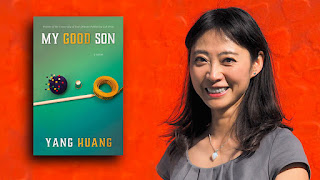
How do authors know where to start and end their stories? If you’re writing a novel based on your own experience, do you have to do research?
What’s the difference between “Young Adult” and “Adult” fiction? Join me for an in-depth conversation with three wonderful writers: Malinda Lo, author of the National Book Award winner Last Night at the Telegraph Club, Yang Huang, Juniper Prize-winning author of My Good Son, and multiple Lambda nominee Lucy Jane Bledsoe, whose forthcoming No Stopping Us Now fictionalizes her adventures as a teen demanding (and winning) school sports programs for girls in Portland.
It's Valentine’s Day, and these authors say every book is ultimately about love.
The show also features music by Mary Lou's Apartment and Emma's Revolution (who are doing a Heart of the Revolution Valentine's Day concert tomorrow as well!).
Tune in Monday, February 14 at
1:00 p.m. PST on KPFA 94.1 FM in the Bay Area and online anywhere at kpfa.org.
(After broadcast, catch it in the archives at http://kpfa.org/program/
Also, next Monday, February 21, KPFA will be presenting a full day of special Black History Month programming (from 6:00 am - 6:00 pm). Be sure to tune in for that! And February 22, our winter pledge drive begins. A pledge of any size during the Monday 1:00 pm hour lets the station know you value feminist voices and helps keep the station on the air in these critical times.
Thanks for all your support.
Monday, February 7, 2022
Guahan (Guam) and Okinawa Peoples: COVID Another Source of US Military Contamination

We hear a lot of news about the COVID transmission, prevention, and infection rates here in US and even about a few European countries. We rarely hear about the transmission of the virus by the US military in two parts of the world dominated by the US military presence: the island nations of Okinawa and Guahan (Guam). Today we are in conversation with Suzuyo Takazato of Okinawa, Neaka Flores of Guahan (Guam), discuss the horrors of COVID infections on their small island nations and Kozue Akibayahsi of Japan provide political context of the US military free reign in Okinawa.
To listen, click here (58 Mins)
About Our Guests
Suzuyo Takazato is a driving force behind the crucial question posed to the present militarized global security system: for whom does the military provide security? She is a long-time feminist peace activist who has analyzed the interplay between sexism and militarism from the experiences of women in Okinawa. Her work has inspired global feminist peace movements for structural understanding of violence against women. Suzuyo helped create Okinawa’s first rape crisis center to provide hotline and face-to-face counseling to victims of sexual violence, and in 1995, Suzuyo’s activism led to a large-scale protest by people of Okinawa against US military bases. She is a founder and co-chair of Okinawa Women Act against Military Violence.Kozue Akibayashi is a feminist researcher/activist, has worked on issues of gender and peace, and is longtime supporter of Okinawa Women Act against Military Violence. She is a professor at Graduate School of Global Studies, Doshisha University in Kyoto, Japan, a member of Women’s International League for Peace and Freedom,
Monaeka (Naek) Flores (she/they) is a queer CHamoru artist and activist. Naek is a member of dynamic community organizations that focus on CHamoru self-determination, environmental justice, and the protection of sacred sites: Prutehi Litekyan – Save Ritidian, I Hagan Famalåo’an Guåhan, and Independent Guåhan, all of which are part of the Fanohge Coalition
All three are members of the International Women's Network against Militarism.
Additional Resources
"The military as a neglected pathogen transmitter, from the nineteenth century to COVID-19: a systematic review"
"Okinawa chief rips U.S. military over spread of Omicron variant" Asahi Shimbun
"Okinawa, hub for US military bases in Japan, reports record number of COVID-19 infections" The Hill
Friday, February 4, 2022
"Will We Have Enough?": Women, Aging, and Economic Well Being
Today is the live "5th Monday Show" hosted by members of the Women's Magazine Collective, Jovelyn Richards, Margo Okazawa-Rey, and Vylma J.
We discuss the topic of women and aging,examining the influences of not only gender, but also race, class, and region where women live. Our starting point is the findings from the December 26, 2021 New York Times article, "Why Older Women Face Greater Financial Hardship Than Older Men." In it they state, "In a troubling picture, American women are looking at a rockier road to secure retirement than their male counterparts."
Listen, click here. 58 mins
Read the article here, https://www.nytimes.com/2021/12/26/health/older-women-financial-hardship-retirement.html?searchResultPosition=1
Tuesday, January 25, 2022
Palestinian Women Political Prisoners Part 2
“I steal moments of happiness but it’s never complete....” Abla Sa'adat

Today, in the second part of the two-part series on Palestinian women political prisoners, I am in conversation with two women directly affected by the incarceration of their loved ones. Abla Sa'adat is a feminist activist and wife of Ahmad 'Sa'adat, general director of the Popular Front for the Liberation of Palestine, who is serving a 30-year sentence in Israeli prison for his political activism. Shirin Abu Fannouneh is the eldest daughter of Shatha Odeh who was arrested and imprisoned in July 2021 as "security threat."
In this two-part series, my goal is to reveal the multiple layers of incarceration itself, the experiences of women prisoners, and the harmful impacts on them, their families, and wider Palestinian society. Listen to a detail discussion of the prisoners' and families' experiences of being trageted by the Israeli militarized political system intent suppressing political activism and all other civil society attempts by Palestinian people to free their country.
To listen, click here 58 min.
To listen to the interview with Khalida Jarrar in Part I, click here.
Wednesday, January 19, 2022
Interview with Painter Lauren Hana Chai
On January 17, Host Jovelyn Richards of The Space Between Us
Interviews painter Lauren Hana Chai.
Click here To listen 58 mins
About Our Guest
For more information about Lauren Hana Chai, click here
Saturday, January 15, 2022
A Tribute to Gloria Watkins bell hooks 1952 - 2021

“All too often women believe it is a sign of commitment, an expression of love, to endure unkindness or cruelty, to forgive and forget. In actuality, when we love rightly we know that the healthy, loving response to cruelty and abuse is putting ourselves out of harm's way.”
“A generous heart is always open, always ready to receive our going and coming. In the midst of such love we need never fear abandonment. This is the most precious gift true love offers - the experience of knowing we always belong.”
bell hook, All about Love
In the first Women’s Magazine of 2022, host Vylma V pays tribute to the prolific feminist writer, scholar, social critic, and inspiration to many of us, Gloria Jean Watkins-- bell hooks--who passed away on 12-15-2021. During the show’s second half, she opens the KPFA phone lines asking for your reflections and ideas about hooks's work, legacy, and passing and about how we may transform the sadness, frustration, and rage from another year of an seemingly unabating pandemic and deepening inequalities and violence into joy, positive action, and hope for 2022. She will be joined by Women's Magazine 4th Monday host Margo Okazawa-Rey.
To listen click here (58 mins.)
For more information
Conversation with Professor Beverly Guy-Sheftall
Tuesday, December 21, 2021
"The Space between US" Host Jovelyn Richards

Host Jovelyn Richards interviews Nekia Wright an education consultant, healing facilitator, and musician based out of San Francisco, CA w She serves as a special education teacher with the Oakland Unified School District and is a certified African traditional healer through the Zimbabwe National Traditional Healer’s Association. She is excited to pilot the 2021 Black to Africa fellowship which connects Black teachers, healers, and public servants to the motherland through 10-25 day cultural & healing experiences in Zimbabwe.
The second 1/2 hour of The Space Between Us: Is Conscious Conversation with AM Davis Sex Worker Activist and Secretary of Strippers United. Today's topic: Exploring ways for Wyt allies to BIPOC communities to Wyt leadership dismantling of Wyt supremacy without our creating the template for them.
Listen here 58 minutes
About Our Guest
Nekia Wright is an education consultant, healing facilitator, and musician based out of San Francisco, CA with over 10 years of experience teaching adults and children globally. She serves as a special education teacher with the Oakland Unified School District and is a certified African traditional healer through the Zimbabwe National Traditional Healer’s Association. She is excited to pilot the 2021 Black to Africa fellowship which connects Black teachers, healers, and public servants to the motherland through 10-25 day cultural & healing experiences in Zimbabwe. Nekia recently returned from Zimbabwe after visiting various regions and collected hours of video footage of interviews with traditional healers, ceremonies, herbs, and more to share! You can learn more about her services by joining the Bronze List to receive monthly tips, lessons, and support along your healing journey. Email nekia@ujamaa-inc.com to request more information about 1 to 1 and small group healing sessions (in-person & virtual options) as well as virtual wellness workshops for schools and businesses. Please enjoy this free gift: https://ujamaa.ck.page/cookinglesson Learn more at ujamaa-inc.com

Tuesday, December 7, 2021
Palestinian Political Prisoners, Women, and Resistance

As part of the activism, on today’s show, I focus on Palestinian women political prisoners. The fact of their existence and the violence inflicted on them is not very known, and rarely seen, in the US and most other places. With the exception of a highly publicized few like Ahed Tamimi and Rasmea Odeh.
The story of political Palestinian prisoners begins with Military Order 101 – “Order Regarding Prohibition of Incitement and Hostile Propaganda” instituted in August 1967, just two months after the beginning Israel’s colonization of Palestine at the end of the ‘67 War.
According to Addameer, Prisoner Rights and Support Association:
"This order criminalizes civic activities including organizing and participating in protests; taking part in assemblies or vigils; waving flags and other political symbols; printing and distributing political material. In addition, the order deems any acts of influencing public opinion as prohibited 'political incitement'.
Article 285 of the Order empowers military commanders to detain an individual for up to six-month renewable periods if they have 'reasonable grounds to presume that the security of the area or public security require the detention.' On or just before the expiry date, the detention order is frequently renewed." This process can be continued indefinitely.
Because they
are categorized as “security detainees” Palestinian people can be arrested, detained
convicted, and imprisoned on numerous allegations in military courts. With no
or inadequate legal representation and due process. The prisoners routinely face deplorable and inhumane
conditions, from torture and solitary confinement to lack of health care and
long-term separation from their families. In June 2021, Addameer issued a
report concerning the violent military raids into prisoners’ cells within prisons.
Can you imagine?
Overall, there is very little news and notice of this aspect of life of the Palestinian people outside the country. Even less is known and understood about women prisoners.
Goal of this two-part series is to reveal the multiple layers of incarceration itself, the experiences of women prisoners, and the harmful impacts on them, their families, and wider Palestinian society. We will also discuss the various creative ways their families and Palestinian people cope and resist.
Today, in Part 1, I’m in conversation with Khalida Jarrar, who was released in September after her 2-year incarceration, one of several throughout her life of activism on behalf of Palestinian people and Palestinian women.
To listen, click here. 58 mins.
About Our Guest
(excerpted from wikipedia)
Khalida Jarrar is a lifelong activist and an elected official. As a member of the Popular Front for the Liberation of Palestine she was elected to the Palestinian Legislative Council in January 2006 and has continued to serve as an elected representative ever since. She is also the Palestinian representative on the Council of Europe and currently head of the Prisoners Committee of the PLC. She played a major role in Palestine's application to join the International Criminal Court.
She has been arrested multiple times by the Israeli authorities. Several of these arrests resulted in administrative detention without any charges being brought. She has also been charged with "incitement and involvement in terror" by an Israeli military court. The incitement charge refers to public statements she made in 2012 in which she criticized the Israeli occupation. The court sentenced her to 15 months in prison, of which she served 6, before being released after an international campaign on her behalf.
In March 2021, after having been held without charge since 2019, she was sentenced by an Israeli military court to two years in prison after a plea bargain, in which she declared herself guilty of membership in an organization, the PFLP, which Israel regards as a terrorist group. She has gone on record to state that her plea bargaining is due to the excruciatingly protracted nature of legal proceedings, lack of faith in Israel's military courts, and the threat, unless she admits guilt, of serving a 7 year sentence. She was released in September, 2021, but was refused permission to be with her gravely ill daughter and view her body after her death, despite her impending release.
Monday, November 29, 2021
Creations from the Womb Space
Host/Producer Kendall Crakow speaks with Dori Varga, Hungarian Poet and Creator of the highly censored Instagram Account Heroine Journal, where she challenges societal taboos around the experiences of Womanhood and Motherhood including birthing, breastfeeding, menstruation, and constructed gender roles. Kendall also speaks with Kamilla Bello, Filipina Lebanese Visual Curator, Womb Worker, and Founder of Goddess Molding, where she centers rituals of transformation in forms of clay, adornments, and herbal medicines. The guests share a bit about their work, their journeys into this work, and also their thoughts on the silencing of Women's bodies, behaviors, and experiences.
To listen, click here 58 mins.

For ore information, Instagram:
@heroinejournal
@888heroinejournal888
@gintong.bathala
@goddessmolding
#bringbackheroinejournal
Tuesday, November 23, 2021
This Bridge Called My Back with Host Julia Hutton

This year is the 40th Anniversary of the publication of This Bridge Called My Back! On Monday's show listen to the prerecorded show by producer Julia Hutton. This was originally broadcasted for KPFA's International Women's Day 2021 special programming. You will have a chance to listen to clips from the original event--SF Bay Area book launch 40 years ago. Can you recognize the "baby voices" of the contributors?
To listen, click here 58mins.
The 40 Anniversary virtual celebration will take place at 5p CA time til around 7:30p. December 3rd. To register for the event, which you all will need to do in order to witness the event, go to: https://www.lasmaestrascenter.ucsb.edu/bridge-40th-rsvp (if you register in advance, you will receive all notices by email of how to get onto the live stream.). Please pass this link on to your peoples and those interested.
Monday, November 8, 2021
Indigenous Health is Global Health
Kendall Crakow, Host

In this hour, we create space for the resilient stories and reflections of three Indigenous, Women healthcare workers and leaders who are deeply committed to advocating for health equity and health justice in the Navajo Communities they serve and call home.
All our guests are affiliated with The UCSF HEAL Initiative (Health, Equity, Action, Leadership), a global health fellowship and community of health professionals striving to bridge barriers to care in deeply marginalized, resource denied communities around the world.
While all of our guests are dedicated to improving the health of their patients and their communities, as well as supporting one another, they come to this work with different backgrounds, specialties, and relationships to the communities they serve. Here to share their experiences and insights with us are Dr. Adriann Begay, MD, Cristina Rivera Carpenter, PhD, MSN, RN-BC and Denee Bex, MPH, RD, LD, CDCES.
Join us, as they share where they draw their strengths from, how they are bridging Indigenous Knowledge Systems with the Conventional Biomedical models they are moving through, and, as they share their visions for what a future centering the needs of Navajo Communities looks like, as well as reflections on how we think about growing Native Leadership in Health.
“I think so many things are relational, and I think wellness is relational. And, if in our area, if we have family that aren’t well, if we have our living world that is not well, if we have part of our community that is not well, then how can we really be well? To me, this is Collective Wellness for all of Us.” -Cristina Rivera Carpenter, PhD
Click here to listen 58 minutes
About Our Guests
Dr. Begay was raised on the Navajo Reservation and is the Daughter of a strong Navajo Woman, the Mother of three, and the Grandmother of nine beautiful grandchildren. Now retired from the Indian Health Service after 21 years of service in Family Medicine and Urgent Care, she currently works with HEAL as a Senior Officer advocating for policy and programs to further Native American Health Care Equity. A long time mentor in and advocate for her community, she has dedicated her career to elevating healthcare for American Indians and Alaskan Natives and increasing the pipeline of AI/AN students who can come home and care for their people.
Cristina Rivera Carpenter is the Granddaughter of Lipan Apache and Indigenous Grandmothers from the state of San Luis Potosi in Mexico on her Matrilineal side and is the Mother of five. She holds a Bachelor of Science in Nursing, a Master of Science in Nursing, and recently finished her PhD in Nursing with a Minor in American Indian Studies. She continues to work clinically, as well as with HEAL, and teaches a class in Sociology at the University of Arizona. She is passionate about addressing health inequities in local and global settings with foci on community, solidarity, and supporting current and future health professionals in pursuing equity-focused careers.
Denee Bex was born and raised on the Navajo Reservation and is currently a registered Dietician employed with Tsehootsooi Medical Center. She holds a Bachelor of Science in Dietetics and a Master of Public Health with a focus on Community Health Education. She is an advocate for healthy traditional Navajo diets and believes that Nutrition Education in the Navajo Community must include the customs, values, and beliefs of Navajo people for it to be impactful. Denee also writes gardening articles for a local Native newspaper and works with community organizations to encourage families to start growing their own food.
For more information:
Wednesday, November 3, 2021
Okinawan People’s Long Courageous Struggle to Stop New US Base Construction and End Militarism


On today’s show the subject was the situation of another colonized
people across the Pacific Ocean.
I was in conversation with Takazato Suzuyo, Ishikawa Hideki,
and Akibayashi Kozue organizing in
Okinawa to stop the construction of the new US Marine Corp Air Station
in Henoko. Like all colonized people, the will and
self-determination of the people of Okinawa are disregarded
by the central government dominated by the LDP, the ruling party.
Today’s show is also in solidarity with the people of Guahan,
a country known mostly as Guam,
the people of Hawaii, South Korea, and Philippines,
living under the dominant presence of the US
military, directly and indirectly.
Their main message to US listeners: please reach out to
our Congresspersons and senators to stop
the construction. What’s at stake are the lives of the
current generation and generations of Okinawan
people,
the fragile ecosystem being destroyed due to construction,
and the lives of young people in the
US facing the poverty draft .
Military security will never yield genuine security.
It is a culture of death and destruction, and
will create only deep insecurity and harm all life.
To listen click here 58 mins.
Learn more here about the history and the struggle!

Subscribe to:
Posts (Atom)